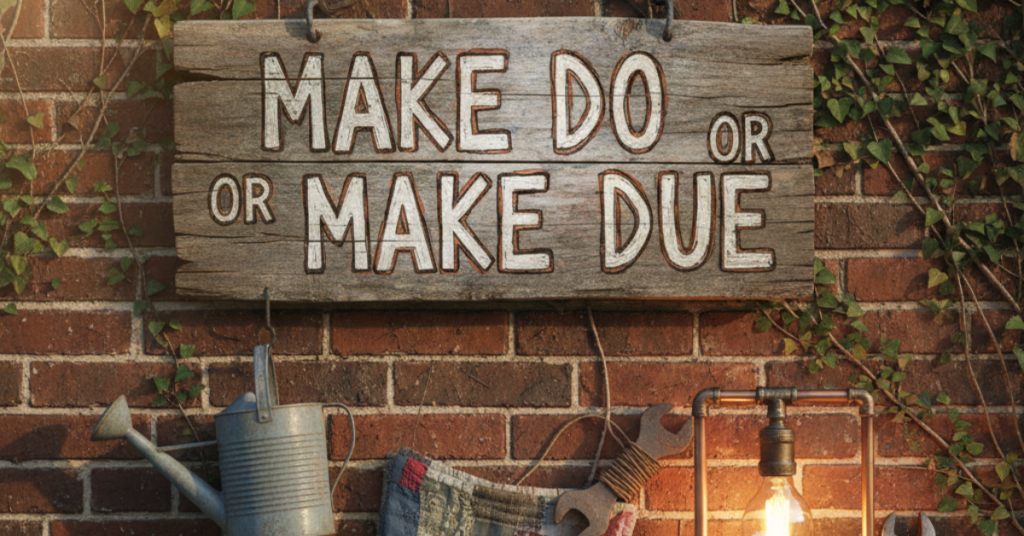

Make do or make due is one of those phrases that trips up even confident writers. You’ve probably seen both versions online — in text messages, social media captions, or even blog posts — and wondered which one is actually correct.
Let’s clear it up once and for all.
Quick Answer: Is It Make Do or Make Due?
The correct phrase is “make do.”
“Make due” is incorrect in this context.
Why?
-
Make do means to manage with what you have, even if it’s not ideal.
-
Make due doesn’t make grammatical sense in standard English.
So if you’re writing:
“We didn’t have enough chairs, so we had to make do.”
That’s correct.
If you write:
“We had to make due.”
That’s a mistake.
What Does “Make Do” Mean?
The phrase make do means:
To cope, manage, or get by using limited resources.
It implies flexibility, resilience, and adaptability.
Examples:
-
We didn’t have cream, so we made do with milk.
-
During the power outage, we had to make do with candles.
-
I couldn’t afford a new laptop, so I made do with my old one.
It often appears in situations where something is less than perfect — but still workable.
Historical Origin of “Make Do”
The phrase “make do” dates back to the 18th century.
It originally meant:
To “make something serve a purpose” or “use what is available.”
The word “do” here refers to action or function. So “make do” literally means to “make something function.”
This phrase became especially popular during:
-
The Great Depression
-
World War II rationing periods
-
Times of economic hardship
It became associated with thriftiness and resilience.
Why Do People Write “Make Due”?
The confusion comes from how similar the words do and due sound.
Let’s compare them:
| Word | Meaning | Example |
| Do | Action or performance | Make do |
| Due | Owed, expected, or scheduled | Payment is due |
“Due” refers to something owed or expected, not to managing resources.
So “make due meaning” doesn’t hold up grammatically.
“Country Girls Make Do” – Cultural Context
You might have heard the phrase “country girls make do.”
This isn’t a grammar variation — it’s a cultural expression.
It reflects:
-
Self-sufficiency
-
Practicality
-
Resourcefulness
-
Making the best of limited resources
In rural or traditional settings, the phrase celebrates resilience and creativity.
Example:
“We didn’t have fancy decorations, but country girls make do.”
Here, “make do” emphasizes adaptability.
Regional Usage (US vs UK)
Here’s the good news:
-
American English: Make do
-
British English: Make do
-
Global English: Make do
There is no regional variation in spelling for this phrase.
Unlike “color” vs “colour,” this one stays consistent worldwide.
Physical vs Metaphorical Usage
Physical Situations
-
Making do with leftover food
-
Making do with small living space
-
Making do with second-hand clothes
Emotional or Mental Situations
-
Making do after disappointment
-
Making do in a difficult relationship
-
Making do while waiting for better opportunities
The phrase works both practically and metaphorically.
Real-Life Examples
Let’s look at how people use “make do” in everyday life.
Social Media
“Couldn’t find my tripod, so I had to make do with stacked books.”
Workplace
“We’re short-staffed, but we’ll make do.”
Family Life
“No oven? We’ll make do with the stove.”
Student Life
“I forgot my charger, so I’m making do at 15% battery.”
It’s a phrase rooted in adaptability.
Common Mistakes
Writing “Make Due”
Incorrect:
“We had to make due without WiFi.”
Correct:
“We had to make do without WiFi.”
Confusing “Due” With Obligation
Correct use of “due”:
-
Rent is due tomorrow.
-
Payment is due next week.
It does not replace “do” in this phrase.
Overusing the Phrase
While useful, “make do” works best in situations involving limitation. It shouldn’t replace phrases like:
-
“Adjust”
-
“Adapt”
-
“Compromise”
Search Trends & Why This Confusion Is Common
The confusion between make due or make do is extremely common online.
Here’s why:
| Reason | Explanation |
| Similar pronunciation | “Do” and “due” sound alike |
| Autocorrect errors | Phones sometimes suggest “due” |
| Lack of grammar awareness | Many don’t know the origin |
| Fast typing | Small words get swapped |
Easy Memory Trick
Think of it this way:
You “do” something.
You don’t “due” something.
So when you’re trying to manage or cope — you make do.
Another trick:
If you can replace it with “manage,” then it’s “make do.”
Read also <<< Tweak vs Tweek
FAQ: Make Do or Make Due
1. Is “make due” ever correct?
No. Not in this phrase. It’s always “make do.”
2. What does make do mean?
It means to manage or cope using what you have.
3. Why do people confuse make due and make do?
Because “do” and “due” sound similar.
4. Is make do informal?
It’s conversational but widely accepted in both formal and informal writing.
5. Is “country girls make do” grammatically correct?
Yes. It uses the correct phrase and reflects cultural expression.
6. Can I use make do in professional writing?
Yes — especially when discussing adaptability or resourcefulness.
7. Does British English spell it differently?
No. It’s the same everywhere.
Final Thoughts
Make do or make due may seem like a small grammar question, but understanding the difference strengthens your writing immediately. The correct phrase is always make do — meaning to manage with what you have.
Language rewards clarity. And when in doubt, remember: you do something — you don’t due it.
Mastering small distinctions like this makes your communication sharper, more confident, and far more professional.