
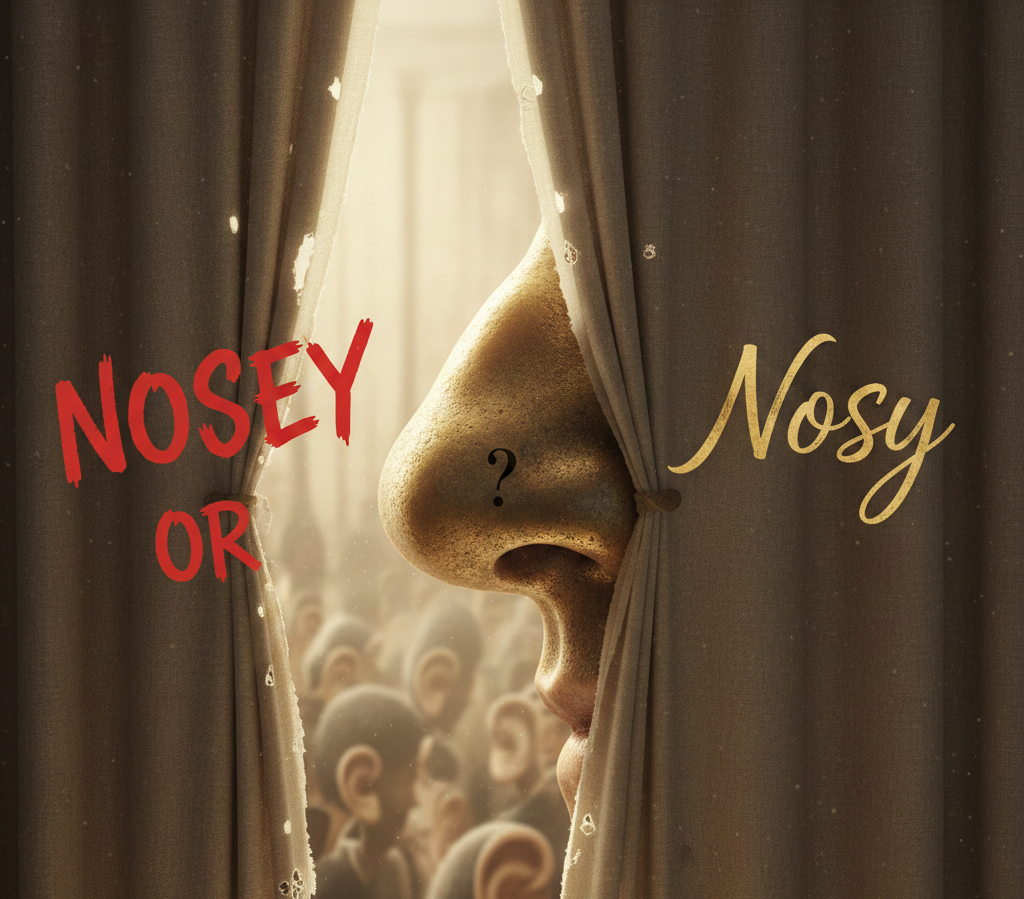

Nosey or nosy is a spelling question many people search when writing messages, stories, or even captions on social media. You might have seen both versions used online and wondered which one is actually correct—or if both are acceptable. The confusion is understandable because English spelling often evolves with usage, and informal writing blurs the rules even more.
Let’s settle this once and for all in a clear, friendly way.
Quick Answer: Nosey or Nosy
Nosey or nosy technically has one standard spelling and one widely accepted variant.
-
Nosy — the standard and preferred spelling
-
Nosey — an informal variant, more common in British usage
Best practice:
If you want to be grammatically safe in formal or professional writing, always use nosy.
Why Do People Confuse Nosey and Nosy?
This confusion happens because:
-
The word relates to the nose, so nosey feels logical
-
Pronunciation sounds the same for both
-
British and American spelling habits differ slightly
-
Informal internet usage spreads alternate spellings
In casual contexts, both appear—but only one is universally accepted.
Word Origin & History
The adjective nosy comes from the word nose, symbolizing someone who metaphorically “sticks their nose” into other people’s business.
-
First recorded usage: late 1800s
-
Originally spelled nosy
-
Nosey appeared later as a phonetic variation
Despite its logic, nosey never became the dominant form in dictionaries.
Contextual Usage: Literal & Metaphorical
Metaphorical Usage (Most Common)
Refers to someone overly curious or intrusive.
Examples:
-
“My nosy neighbor watches everyone.”
-
“Stop being so nosy!”
Literal Connection
While related to the nose symbolically, nosy does not describe physical nose traits.
Incorrect:
-
“She has a nosy face.”
Correct:
-
“She asked too many questions—very nosy.”
Regional Usage: US vs UK
| Region | Preferred Spelling | Notes |
| United States | Nosy | Strongly preferred |
| United Kingdom | Nosy / Nosey | Both seen, nosy still standard |
| Global English | Nosy | Safest choice |
Dictionaries worldwide list nosy as the primary spelling.
Common Mistakes to Avoid
-
Using nosey in formal writing
-
Assuming both spellings are equal in professional contexts
-
Confusing “nosy” with curiosity (it’s usually negative)
Tip: If it sounds rude or intrusive, nosy is the right word.
Real-Life Examples
Conversation
“I didn’t mean to sound nosy, but what happened?”
Social Media
“Why are people so nosy online? ”
Workplace
“He asked a few nosy questions during the meeting.”
Storytelling
“The nosy child overheard every secret.”
Usage Trends
| Spelling | Popularity | Formal Acceptance |
| Nosy | Very High | ✅ |
| Nosey | Moderate | ⚠️ Informal |
Searches for nosey or nosy often come from ESL learners and writers editing content.
Frequently Asked Questions (FAQs)
1. Is “nosey” wrong?
Not completely, but it’s considered informal and nonstandard.
2. Which spelling should I use in essays?
Always use nosy.
3. Do dictionaries accept “nosey”?
Some list it as a variant, but nosy is primary.
4. Is “nosy” offensive?
It can be mildly negative, depending on context.
5. Can “nosy” describe curiosity?
Yes, but usually intrusive curiosity.
6. Is there a verb form?
No standard verb form exists.
7. Does pronunciation change?
No—both sound exactly the same.
Final Thoughts: Nosey or Nosy
Nosey or nosy may look like a tiny spelling detail, but choosing the right one shows confidence and clarity in your writing. While nosey pops up informally, nosy is the correct, dictionary-approved spelling you can always rely on.
Memorable takeaway:
Nosey or nosy—when in doubt, drop the extra “e” and stick with nosy for clean, correct English every time.