
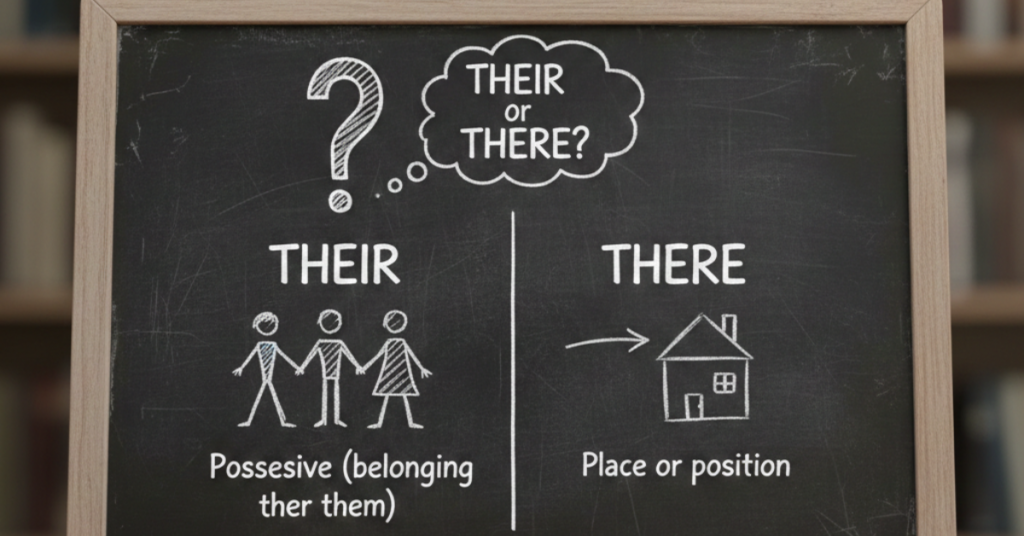

Thier or their is a common spelling dilemma that confuses many English speakers and writers. You may have typed “thier” by mistake in school, work emails, or social media. But which is correct, and when should it be used? Let’s clarify this once and for all.
Quick Answer: Thier or Their
-
Correct Spelling: their
-
Incorrect Spelling: thier
-
Meaning of “their”: Indicates possession; something belongs to “them.”
Example:
“The students left their books on the desk.”
Remember: Thier is always incorrect—avoid it in formal and informal writing.
Historical Background
The word their has roots in Middle English, adapted from Old Norse þeirra, which means “of them.” Over centuries, it became the standard possessive pronoun for plural subjects.
-
Their = possessive of they
-
Thier = misspelling; no historical basis
Even though “thier” is widely seen online or in casual writing, it is considered a spelling error in all formal contexts.
Contextual Usage: When to Use “Their”
Physical / Possessive Usage
-
Denotes ownership or relation.
“The dogs wagged their tails happily.”
Metaphorical / Abstract Usage
-
Can indicate figurative possession.
“Every artist has their unique style.”
Pronoun Substitution Tip
-
If “their” confuses you, substitute “his or her” (singular) or “of them” to check correctness.
“The team celebrated their victory.” → “The victory of the team was celebrated.”
Regional & Cultural Usage
| Term | US English | UK English | Global English |
| Their | Standard | Standard | Standard |
| Thier | Incorrect | Incorrect | Incorrect |
| There / They’re | Different words; see caution below | Different words | Standard |
Insight: “Their” is universally correct for possessive usage. “Thier” is always wrong, regardless of region.
Common Mistakes to Avoid
-
Confusing their with there (location) or they’re (they are).
-
Typing thier by accident.
-
Using their in singular contexts without clarification.
Tip:
Their = possession
There = place
They’re = they are
Real-Life Examples
Correct Usage
-
“The children took their coats.”
-
“Everyone should respect their opinions.”
Incorrect Usage
-
“The children took thier coats.”
-
“Everyone should respect thier opinions.”
Social Media / Informal Writing
-
“Did you see thier post?” Avoid; should be “Did you see their post?”
Data & Trends
| Spelling | Search Volume | Usage Context |
| Their | Very High | Correct, formal & informal |
| Thier | High | Incorrect, common typo |
| There | Very High | Location-based, unrelated |
| They’re | Very High | Contraction for “they are” |
Read Also <<< Take Effect or Take Affect
Frequently Asked Questions (FAQs)
1. Is “thier” ever correct?
No is always a spelling mistake. The correct word is their.
2. How do I remember the correct spelling?
Think **“their” has the i after the e, following the word “they” → they → their.
3. Can “their” be singular?
Yes, for gender-neutral singular usage:
“Each student should submit their assignment.”
4. How is “their” different from “there”?
-
Their = possessive
-
There = location
5. How is “their” different from “they’re”?
-
Their = possessive
-
They’re = contraction of “they are”
6. Is “their” used in formal writing?
Yes, their is the standard possessive pronoun in both formal and informal English.
7. Are there any exceptions?
No, their is always correct; “thier” has no exceptions.
Conclusion: Thier or Their
Their is the correct spelling for the possessive form of “they,” while thier is an incorrect common typo. Using their correctly ensures clarity in both formal and informal contexts. Whether you’re writing essays, emails, or social media posts, always check for their—not thier.