
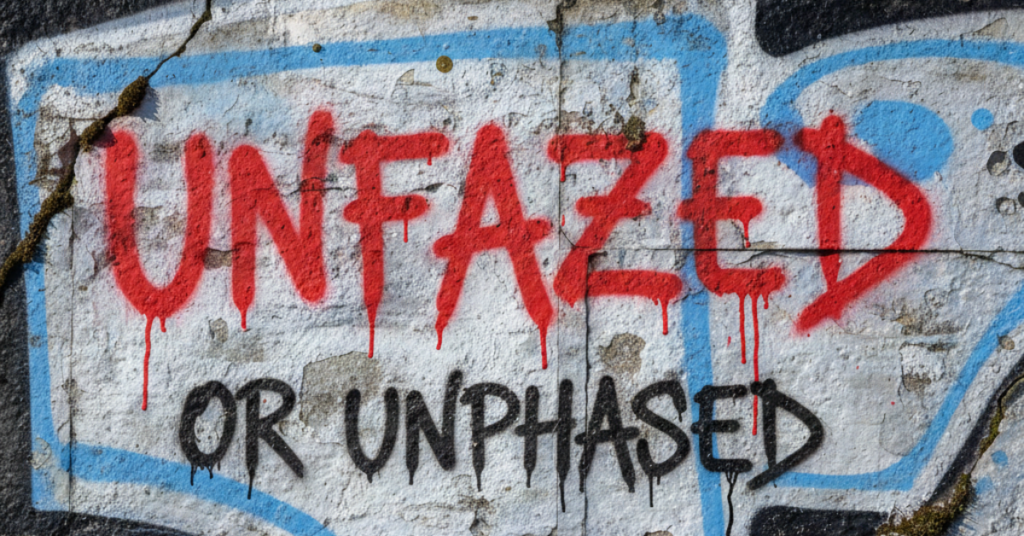

Unphased or unfazed is a common question for English speakers and writers. Many people are unsure which spelling is correct when describing someone who remains calm under pressure. Using the wrong version can make your writing look less polished.
Let’s clear up the confusion once and for all.
Quick Answer: Unphased or Unfazed
The correct spelling is:
-
Unfazed – correct
-
Unphased – incorrect
Unfazed means not disturbed, worried, or affected by something. Unphased is a common misspelling due to pronunciation similarity but has no meaning in standard English.
Example:
“She remained unfazed despite the criticism.”
What Does “Unfazed” Mean?
Unfazed is used to describe someone who stays calm, composed, or unaffected in stressful or challenging situations.
Common uses:
-
Emotional resilience: “He was unfazed by the unexpected changes.”
-
Professional settings: “The CEO was unfazed by the financial setback.”
-
Everyday life: “She stayed unfazed during the chaotic event.”
It’s about staying calm and unaffected, not about being physically “phased.”
Origin & Historical Background
The word unfazed comes from the verb faze, meaning “to disturb or disconcert.”
-
Faze → Middle English fesen, meaning “to daunt or disturb.”
-
Un- → Prefix meaning “not.”
Hence, unfazed literally means not disturbed or disconcerted. It has been used in modern English since the 20th century.
Contextual Usage: Physical & Metaphorical
Physical / Real-life Usage
“Even after the loud explosion, the dog seemed unfazed.”
Metaphorical / Emotional Usage
“She was unfazed by the gossip spreading around her.”
Incorrect Usage
“He was unphased by the storm.”
The error comes from confusing phase (stages) with faze (disturb).
| Phrase | US English | UK English | Global English |
| Unfazed | Correct | Correct | Standard |
| Unphased | Incorrect | Incorrect | Non-standard |
No English-speaking region accepts unphased as correct.
Common Mistakes to Avoid
-
Confusing faze (verb: to disturb) with phase (noun: a stage or step)
-
Using unphased in formal writing
-
Forgetting that unfazed is about emotional or mental steadiness
Quick tip: If you mean not bothered or affected, use unfazed.
Real-Life Examples
Professional / Workplace
“The manager was unfazed by the challenging client.”
Social Media
“She stayed unfazed by the online criticism.”
Everyday Conversation
“He was completely unfazed when his plans got canceled.”
Incorrect Usage
“He remained unphased during the debate.”
Search Trends & Usage Data
| Term | Search Volume | Accuracy |
| Unfazed | High | Correct |
| Unphased | Moderate | Incorrect |
Most searches for unphased come from spelling errors, as people hear the word pronounced but don’t know the correct spelling.
Frequently Asked Questions (FAQs)
1. Is “unphased” ever correct in English?
No. It’s always a misspelling of unfazed.
2. Can “unfazed” be used for physical calmness?
Yes, if someone remains composed or unaffected physically, e.g., “He was unfazed by the loud noise.”
3. Is “unfazed” formal or informal?
It can be used in both formal and informal contexts.
4. Can “unfazed” be used in professional writing?
Absolutely. It’s perfect for describing calmness under pressure.
5. What is the difference between “faze” and “phase”?
-
Faze – verb meaning to disturb
-
Phase – noun meaning stage or step
Conclusion: Unphased or Unfazed
Unphased or unfazed can be confusing, but only one is correct in English. Unfazed describes someone who remains calm, composed, or unaffected in any situation. Unphased is a common spelling mistake that should be avoided.
Unphased or unfazed—remember this: whenever you want to indicate someone is not disturbed or bothered, always use unfazed. It’s clear, correct, and widely understood.