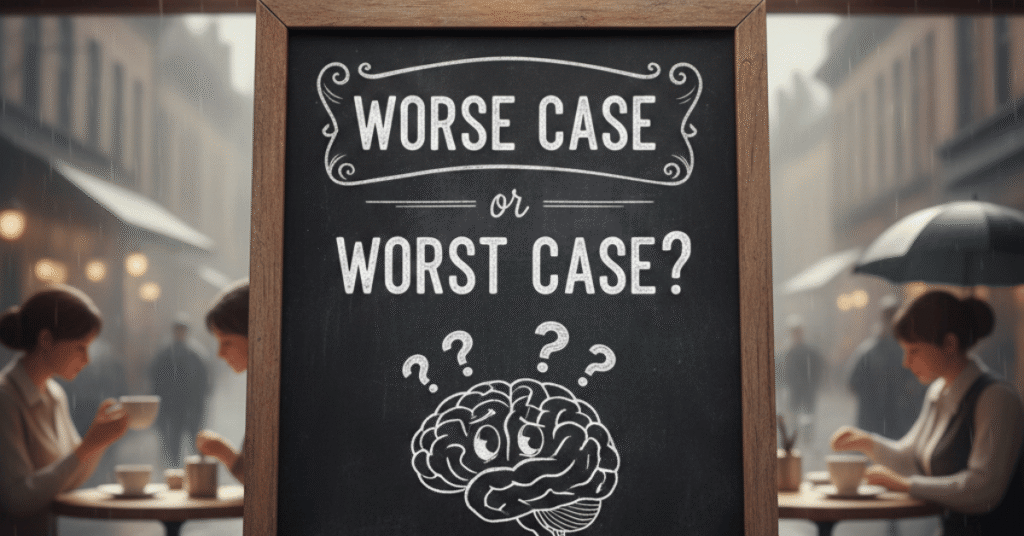

Worse case or worst case is a question people search because both versions sound believable in everyday conversation. You’ll hear them at work meetings, see them online, and even read them in emails—but only one is considered correct in standard English. If you’ve ever paused mid-sentence wondering which one to use, you’re exactly where you need to be.
Let’s break it down clearly, without grammar jargon or confusion.
Quick Answer: Worse Case or Worst Case?
Worse case or worst case has a clear grammatical answer:
-
Worst case is the correct and accepted phrase
-
Worse case is incorrect in standard usage
The correct expression is “worst case” or “worst-case scenario.”
Why “Worst Case” Is Correct
The key lies in understanding comparatives vs. superlatives:
-
Bad → worse → worst
-
Worst means the most severe or extreme possible outcome
A case refers to a situation or outcome. Since you’re talking about the most extreme situation, you must use worst, not worse.
Correct:
In the worst case, we’ll have to cancel the project.
Incorrect:
In the worse case, we’ll have to cancel the project.
What About “Worst-Case Scenario”?
This is just a longer, more specific version of the same idea.
-
Worst-case scenario = the most negative outcome that could happen
Example:
Let’s prepare for the worst-case scenario before launching.
Both worst case and worst-case scenario are grammatically sound and widely used.
Historical & Language Background
The phrase “worst case” has been used in English since the early 19th century, especially in legal, military, and risk-planning contexts. It comes from scenario-based thinking—imagining outcomes from best to worst.
“Worse case” never gained acceptance because English doesn’t treat “case” as something you compare—it’s something you rank absolutely.
Contextual Usage: Literal & Metaphorical
Literal Use
In the worst case, the engine will need replacement.
Metaphorical Use
The worst-case scenario is losing customer trust.
In both physical and abstract contexts, worst case remains correct.
Regional Usage: US vs UK
This rule is consistent across English-speaking regions:
| Region | Correct Usage |
| United States | Worst case |
| United Kingdom | Worst case |
| Canada | Worst case |
| Australia | Worst case |
No regional exceptions here—worst case wins globally.
Common Mistakes People Make
Here’s where confusion usually happens:
-
Mixing up worse (comparative) with worst (superlative)
-
Assuming casual speech rules apply to writing
-
Thinking “worse case” sounds more conversational
Easy fix:
If you mean the most extreme outcome, always choose worst case.
Real-Life Examples
Workplace
Let’s budget extra time in the worst case.
Social Media
Worst-case scenario: the Wi-Fi drops during the meeting
Everyday Conversation
Even in the worst case, we’ll be okay.
Usage Trends & Data
| Phrase | Usage Frequency | Grammar Acceptance |
| Worst case | Very High | Correct |
| Worst-case scenario | Very High | Correct |
| Worse case | Moderate (spoken) | Incorrect |
| In the worst | Low | Context-dependent |
Modern English usage strongly favors worst case in both spoken and written forms.
FAQs About Worse Case or Worst Case
1. Is “worse case” ever correct?
No. It’s considered grammatically incorrect in standard English.
2. Why do people still say “worse case”?
Because it sounds natural in casual speech, but grammar rules say otherwise.
3. Can I say “in the worst”?
Only with additional context, like “in the worst situation”.
4. Is “worst-case scenario” formal?
It works in both formal and informal settings.
5. Does hyphenation matter?
Yes. Use worst-case as an adjective before a noun (worst-case scenario).
6. What’s a simpler alternative?
You can say “if everything goes wrong” in casual conversation.
Final Thoughts: Worse Case or Worst Case—Now You Know
Worse case or worst case doesn’t have to be a mental speed bump anymore. The rule is simple: when you’re talking about the most extreme possible outcome, “worst case” is always correct.
Memorable takeaway:
If you mean the most bad outcome imaginable, go with worst case—every time.
Worse case or worst case becomes an easy choice once you remember this: English doesn’t compare situations here—it ranks them.